☘️ What nature teaches us about the art of composing a photograph
You can't just learn composition from books. It can't be summed up in the rule of thirds or the guidelines drawn on a screen. It's something you observe. And the greatest teacher of composition... is nature itself. 🧐
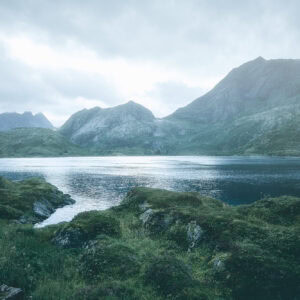
Even before painters theorised about proportions, before photographers talked about perspective or visual balance, nature was already composing; Through light, through mass, through the void, through cycles. Looking at nature, for me, is learning to compose 😜.
1. Nature never overloads
Observe a snow-covered landscape, a dune, a tree isolated in the mist. Nature knows how to remove. It was practising minimalism long before the word existed.
In photography, we tend to want to fill the frame, to add, to multiply the elements, to seek impact. But nature teaches us one fundamental thing:
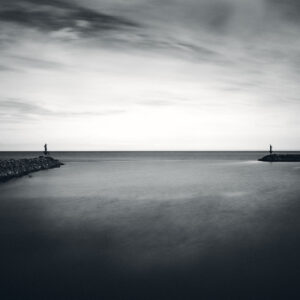
empty space is an active element in the composition.
The sky, the mist, the sea, the snow - these are not absences. They are breathing cycles. And often, what makes an image powerful is not what it shows... but what it leaves untouched.
2. Nature creates lines without drawing them
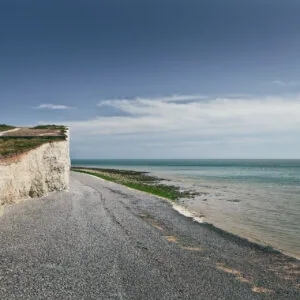
Rivers, cliffs, paths, branches, waves... Nature is a network of invisible lines. These lines guide things, forces, and of course our eyes. They direct the eye towards a point of interest. They create movement.
When we photograph a landscape, let's ask ourselves this question:
Nature is already showing us the way. Our role is not to invent the composition... but to reveal the one that exists., don't you think? 😜
3. The natural balance is not symmetrical or geometric
Nature is almost never perfectly centred. A tree off centre, a mountain more massive on one side, a sun slightly off axis.
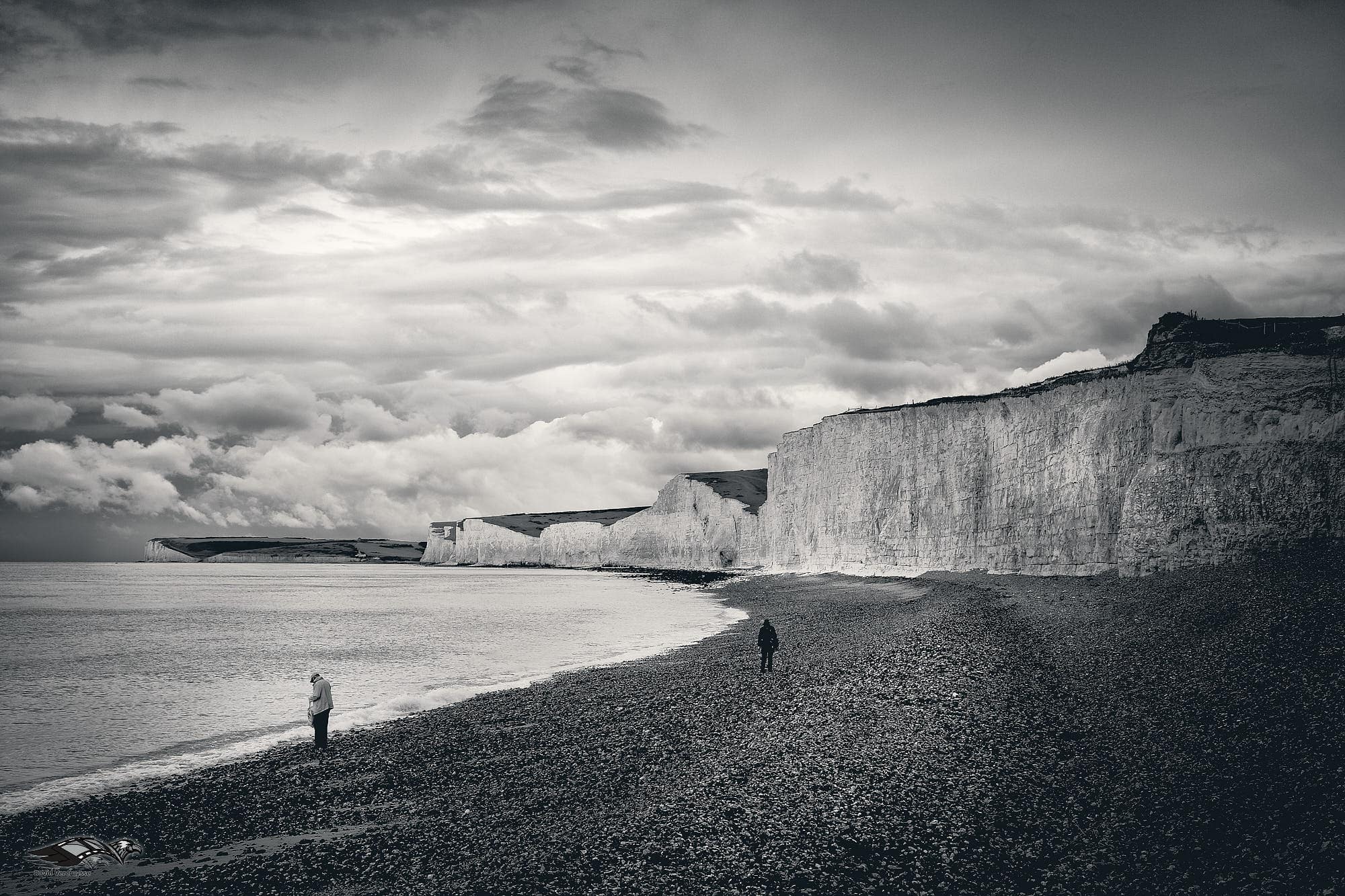
And yet... why does this ensemble hold together in spite of everything? Because balance isn't about symmetry. It's about visual weight. A small, dark silhouette can balance a vast, bright sky.
A dense rock can counterbalance a clear horizon. Nature teaches us to sense this intuitive balance. And that's exactly what makes the difference between a “decent” photo and an inhabited image.
4. Light structures more than objects
It's not the trees that make up a forest, it's the light that connects them, that creates life, an ecosystem. An oblique beam creates a diagonal, a shadow sculpts a volume, a backlight simplifies a scene.
Nature uses light like a paintbrush. In photography, learning to compose often means learning to see:
Light shapes and sculpts the composition far more than the physical elements themselves.
5. Nature works in layers
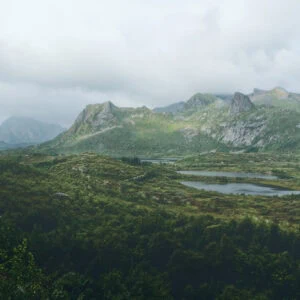
Foreground, middle ground, background - depth is omnipresent in the natural world, mist creates successive planes, atmospheric perspective softens distant areas. Variations in contrast create hierarchy.
Composing a strong image often means :
Nature shows us that narrative is born of depth. 😎
6. Apparent chaos hides a structure
Looking at a dense forest, at first sight it's chaos.
But in reality, we can also see :
Nature is not disordered. It is organic, and an organic composition can be much more powerful than one that is too rigid. This is perhaps an essential lesson: composition is not mathematical, it's alive.
7. Time is a compositional tool
Nature also works with time:
A scene is never static. Waiting can transform an average composition into a strong image. In this sense, composing also means choosing the exact moment when nature reaches its equilibrium.
8. Observe before framing
In our work as nature (and travel) photographers, we all know this: The best composition doesn't always come from moving 10 metres. Sometimes it comes from 5 minutes of waiting and silent observation.
Before triggering :
All we have to do is listen and see what nature is trying to say.
9. Composing means collaborating
We often talk about “mastering” nature, but in photography we don't master anything, we engage in dialogue. Composing an image is not about imposing a structure, it's about identifying and recognising a natural structure and sublimating it. Nature is not so much the subject as our co-author.
10. Conclusion: becoming a student again
To sum up, nature teaches us :
In my opinion, composition is not a rule, but a way of listening. Becoming a better photographer is not always about learning more techniques... but about observing the world more closely.
Faced with a landscape, are you trying to “apply” a rule?...or do you take the time to see how nature has already composed the scene?
I'd be curious to read about your experience. 🤓 Has a landscape ever taught you something about composition without you realising it? ? Share your experience in the comments below.
If you wish to read more philography, I invite you to visit this category of my articles, or even better browse my online galleries click here.
Thank you for visiting Dragonstreet Photography and see you soon,
David