Vous aimez mes articles et mes films de terrain ? Laissez-moi votre email : je vous préviens à chaque nouvel article et à chaque nouveau film sur YouTube, avec une citation en prime.
Pas 40 mails par semaine : j'ai aussi des chemins à explorer !
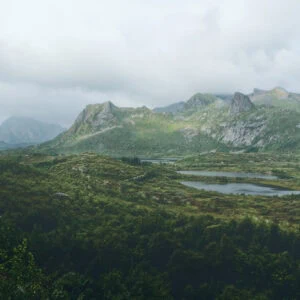
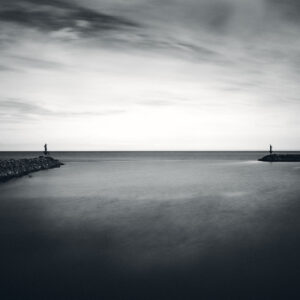
A clear horizon, soft light on a hill, an almost motionless body of water... and something inside us slows down. The body relaxes a little. Your gaze settles. The noise inside drops a notch.
This feeling is universal, yet it doesn't just appear in any setting. Some landscapes leave us indifferent. Others, on the contrary, soothe us almost instantly. As if’they spoke to an older, quieter, more sensitive part of us. 🧐
So why do certain landscapes immediately soothe us?
No doubt because a landscape never acts solely as an external image. It meets our way of seeing, our emotional state, our need of the moment. It touches both the eye and something more intimate. And this is precisely where photography becomes exciting: it's not just about showing a place, it's also about to translate what it awakens in us. Research into environmental psychology suggests that natural scenes encourage a smoother attention span and more fluid perception than more visually demanding environments.
1. Visual simplicity: when the eye can finally relax
Soothing often starts with something very simple: legibility.
Faced with an uncluttered landscape, the eye quickly understands what it is seeing. There's no need to sort through a multitude of information, to look for an entry point, to fight against visual overload. It moves naturally through the image. This ease of reading already creates a form of calm.
This is also why a minimalist scene can be so powerful. A vast sky, a clear horizon, a lone mountain, an isolated tree in the mist... There are few elements, but everyone breathes. There's no attempt to attract attention in a blunt way. The landscape doesn't impose itself: it welcomes you. 😉
In photography, this simplicity is not an impoverishment. It's a choice. Cleaning up a composition doesn't mean taking the life out of the image. It's about removing what's confusing and revealing what's really important.
When the gaze does not struggle, calm can enter. Studies on the aesthetic preference of natural scenes show that certain visual properties, in particular a more fluid and less aggressive organisation, contribute to this sensation of perceptive ease.
Another element plays an essential role: the rhythm.
Nature is full of discreet repetitions. The waves return. Reliefs respond to each other. Tree trunks create cadences. Clouds trace slow lines. Nothing is perfectly symmetrical, and yet everything seems coherent.
Perhaps that's what soothes us: to feel organisation without rigidity. A living order. A flexible structure. Where some very artificial scenes give us the impression of tension or rupture, natural landscapes often offer a more organic continuity. You look at it as if you were breathing.
Even before analysing a scene, you sense this harmony. You feel it physically. You don't need to name it for it to work.
In landscape photography, learning to see these rhythms changes everything. An image becomes more soothing when it allows the eye to move through natural lines, gentle repetitions, forms that respond to each other without colliding. In fact, some research links the attraction of landscapes to organised visual structures that are neither too poor nor too chaotic.
3. The role of emptiness: what breathes soothes us
In an image, emptiness is not lack. It's a place of rest. A place where the eye has nothing to resolve. It can simply be there.
A wide sky, a calm sea, a sheet of mist, an open plain, a mountain surrounded by space... This visual void acts like silence. It doesn't say less. It says something different. It gives the scene a breath that our mind immediately recognises.
This is probably why the most soothing landscapes are not always the most spectacular. They are sometimes the most uncluttered. The ones that leave room. The ones that don't try to show everything.
In photography, this negative space is precious. It creates balance, breath and presence. It allows the subject to exist without being stifled. It gives the image a form of restraint, and this restraint often hits home more than accumulation. 🤓
The emptiness takes nothing away from the image; it allows it to breathe.
4. Soft light: the invisible stuff of calm
The same landscape can change completely depending on the light.
Under harsh light, everything becomes sharper. Contrasts rise, shapes stiffen and the eye is put under greater strain. It's not necessarily less beautiful, but it's often less soothing.
On the contrary, a soft light envelops. It links the elements together. It softens contours, leaving more nuance, more transition, more calm. Daybreak, late afternoon, an overcast sky, diffused light after rain: these are often These are the moments that give the landscape its most inner quality.
Light has a direct effect on the way an image feels. It doesn't just illuminate the scenery. It regulates its emotional temperature.
In photography, the search for appeasement often means looking for a light that accompanies rather than strikes. Light that suggests rather than demonstrates. Light that lets the materials breathe. Work on restorative environments emphasises the importance of gentle visual stimuli, capable of capturing attention without saturating it.
5. Inner resonance: what the landscape awakens in us
But deep down, perhaps the deeper reason lies elsewhere? 🤔
A landscape doesn't just soothe us because of its composition, its light or its simplicity. It soothes us because it encounters something within us. A need for silence. A tiredness. An old memory. A desire for space. A part of us that everyday life sometimes leaves speechless.
We never look at a landscape neutrally. We look at it with our state of mind, our history, our sensitivity, and our shortcomings too. That's why the same place can overwhelm one person and leave another at a distance. The landscape is never just outside. It becomes a discreet mirror.
Some places are just like us, but we can't explain it. A calm expanse when we need to breathe. A fragile light when we're going through a hazy period. An open horizon when everything seems too tight.
This is where photography takes on a deeper dimension. We don't just photograph a place. We photograph the way that place resonates with us. 😁
And perhaps that's why some landscape images are so moving. Technically, they may be simple. But they contain a real presence. They don't just show a place. They transmit a state.
6. How to incorporate this sense of calm into your landscape photography
Photographing a soothing landscape is not about copying a recipe. It's about refining your way of seeing.
The first thing is to simplify. Before shooting, you need to ask yourself what really matters in the scene. An image often gains in strength when it is removed rather than added.. A step to the left, a tighter framing, a better-placed horizon, and everything becomes clearer.
You also need to learn to spot visual noise. A parasitic shape at the edge of the frame, an element with too much contrast, an area that catches the eye for no reason: these are often small things, but they prevent the image from breathing.
Looking for natural lines helps a lot. A curve in the riverbank, a succession of hills, a discreet path, layers of relief... These lines gently guide the eye. They give the image its inner rhythm.
Emptiness, too, deserves to be embraced. Leaving sky. Leaving water. Leaving distance. Not everything has to be filled. A photograph can be powerful precisely because it leaves air.
Finally, light is decisive. Photographing early, late or in diffused light transforms the final sensation. The atmosphere becomes more enveloping, more subtle, more accurate.
But beyond these visual choices, there's an even more important question: What calms me here? When we photograph from this question, we're no longer just looking for a beautiful image.. We are seeking a perceptible truth. And this truth can be seen.
7. Why do landscapes really soothe us
To summarise, we could say this: landscapes are soothing because they offer the gaze a more fluid, more breathable, more coherent experience. They sometimes simplify what our mind or our mentality complicates.. They provide space where we feel overwhelmed. They introduce rhythm where we experience noise. They bring in gentle light where everything seemed too harsh.
But above all, they remind us of ourselves. The landscape alone does not soothe. It creates the conditions for a return. A return to silence, to attention, to sensation, to something more true within us.
And perhaps that, fundamentally, is what the’We are also looking in photography not just show the world, but find an internal link through it.
8. Conclusion
Certain landscapes immediately soothe us because they speak not only to our eyes. They speak to our inner rhythm. Shamrock
Their simplicity is restful. Their shapes accompany us. Their emptiness allows us to breathe. Their light envelops us. And their presence awakens within us something calm, profound, sometimes even forgotten.
Photographing a landscape, from this perspective, is not just about capturing a place. It's recognising a resonance. It's feeling that in certain places, the outside world gently puts things back in order within us. A landscape rarely soothes us for what it merely shows. It soothes us by what it silently reconnects.
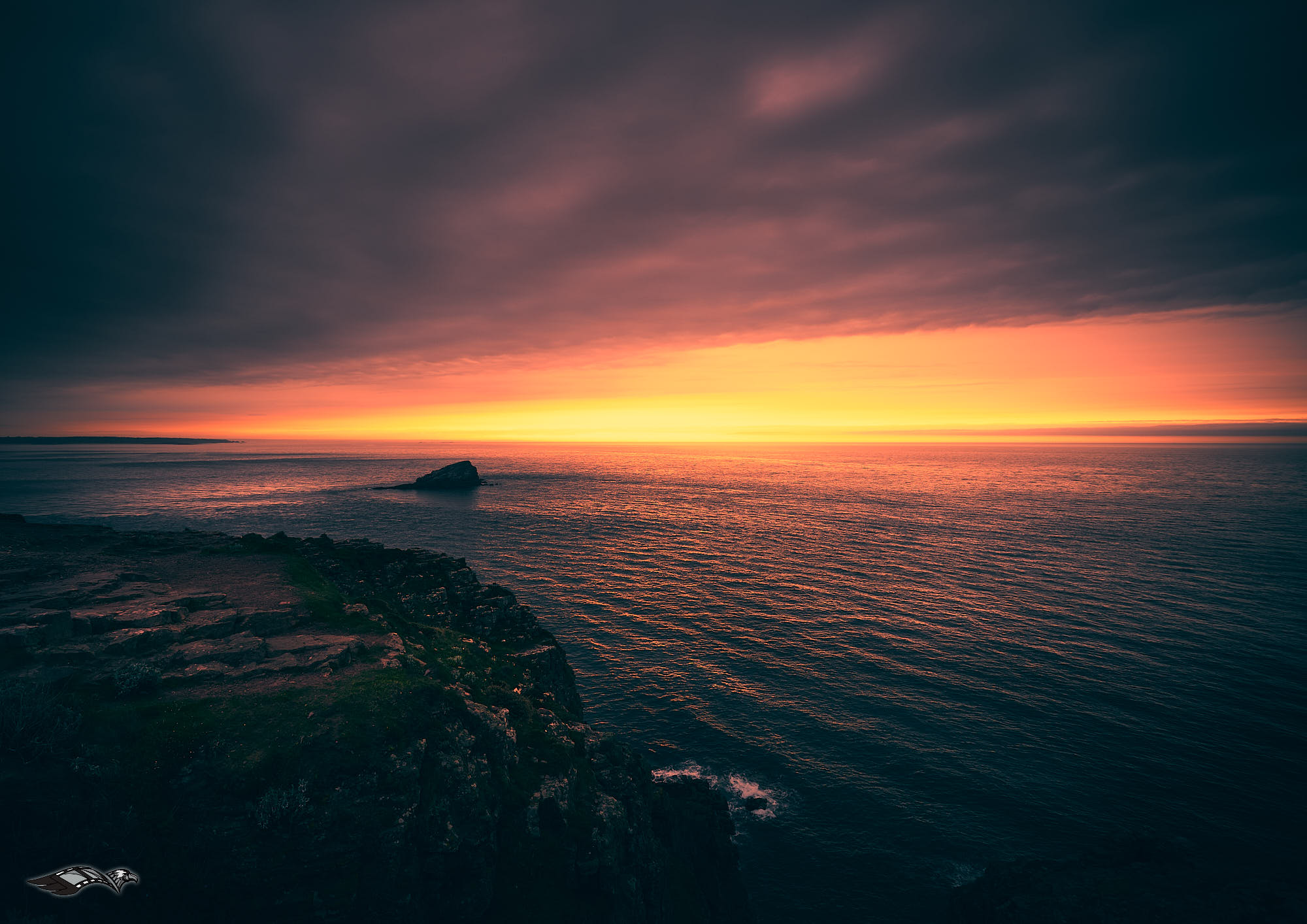
If you'd like a little soothing sunset warmth, and fancy a bit of travel, I invite you to my online gallery » twilight heat« .
Thank you for your visit, and we hope to see you again soon.,
David
9. FAQ
Why is nature so calming?
Nature is soothing because it often offers a more fluid, less aggressive, and more breathable visual experience. Organic shapes, natural rhythms, space, and soft light create an environment that our eyes assimilate with greater calm.
What are the benefits of landscapes for well-being?
Landscapes can promote a sense of relaxation, detachment, and mental breathing. They often help us to slow down, release visual tension, and re-engage with a simpler form of presence.
Why do some landscapes touch us more than others?
Because a landscape doesn't just resonate with how it looks. It's also connected to our inner state, our memory, our fatigue, or our needs at the moment. What calms us in a place often says as much about us as it does about the landscape itself.
How do you convey a soothing emotion in landscape photography?
To create a calming image, it is often useful to simplify the scene, eliminate visual noise, leave space within the composition, look for natural lines, and favour soft light.
Why do some landscape photos seem calmer than others?
Because they are generally more legible, more airy and more visually coherent. A sober composition, soft lighting and a genuine sensitive intention often make a photograph calmer and more lived-in.