Vous aimez mes articles et mes films de terrain ? Laissez-moi votre email : je vous préviens à chaque nouvel article et à chaque nouveau film sur YouTube, avec une citation en prime.
Pas 40 mails par semaine : j'ai aussi des chemins à explorer !
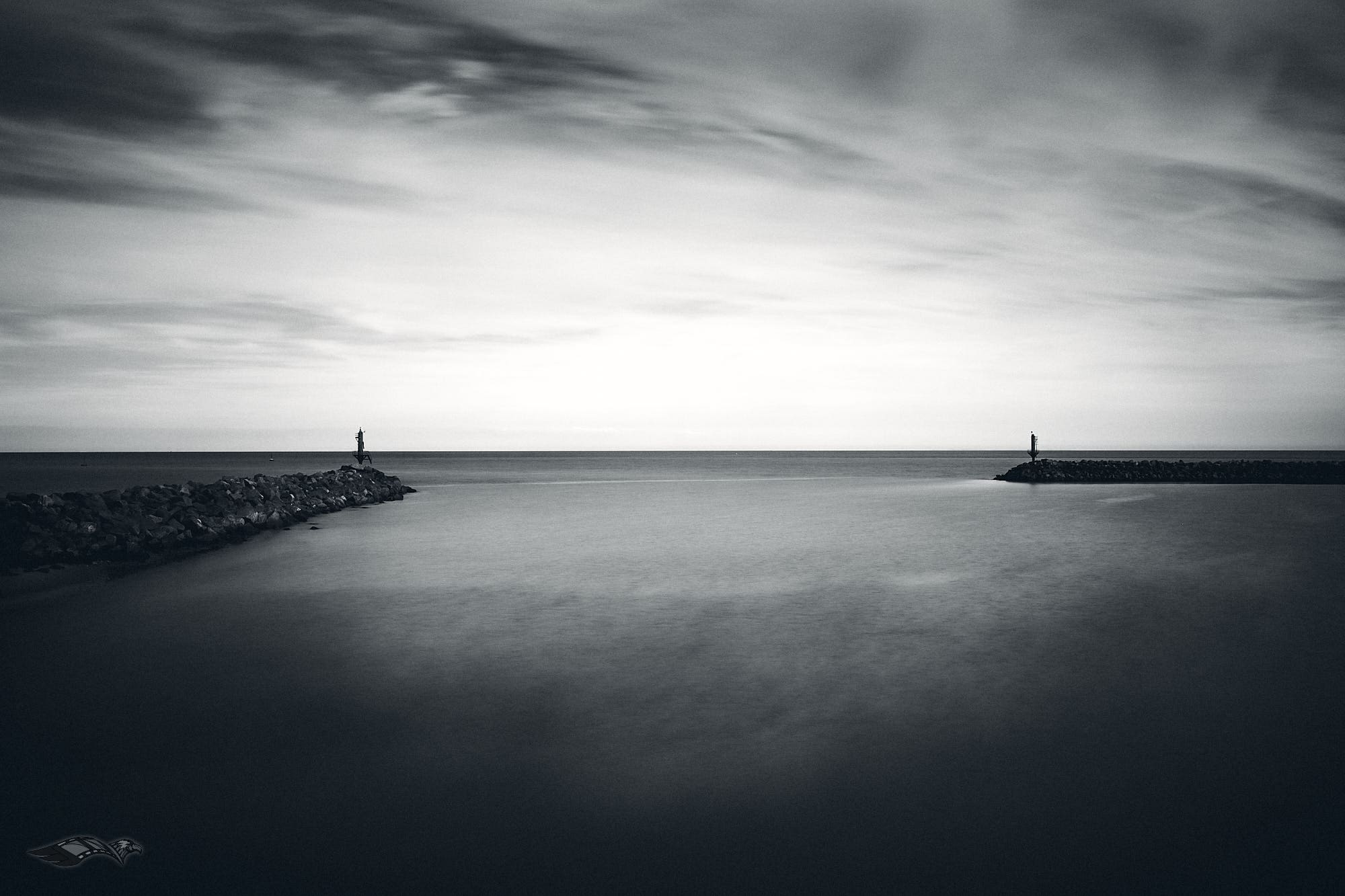
England - Margate - The mistake of wanting to photograph everything
When starting out in photography, or even when progressing, even more so with digital and smartphones, There is a very strong temptation: to want to photograph everything.
A landscape, a street, a light, a detail, an animal, a silhouette, an ancient doorway, a reflection in the water, a cloud, a texture, an isolated tree, a scene from life… Everything seems to deserve an image. And in a way, that's true. The world is full of possible subjects. But that's precisely where the real problem begins.
In photography, anything can become a subject, but not everything necessarily makes for a good photograph. The mistake is not to see many things. On the contrary, it is often a sign of true sensitivity.. The mistake begins when we believe that everything must be captured, everything brought back, everything kept, as if thequantityimages could replace the strength of a look.
A sensitive photographer often sees too much. 👍 He notices a light on a stone, a shadow on a wall, a line in a landscape, a fleeting expression, a mist in the distance, a movement in the grass. He sees what many do not even look at. It is therefore not a flaw. It is even an essential quality.
The problem arises when this visual richness becomes a distraction.. We then move from one subject to another without really delving into any of them. We photograph quickly, for fear of missing something. We accumulate images, but we no longer really build an intention. We're coming back with a lot of files, but sometimes few strong images. 🤔
It's a sensation that many photographers are very familiar with: a seemingly productive photo outing, with several hundred clicks, then at the sorting stage, a strange impression. There are decent shots, sometimes pretty ones, but nothing that truly stands out. Nothing that clearly says: this is what I saw, this is what I felt, this is what I wanted to convey. It's not always a technical problem. It's not necessarily a mistake with the camera body, lens, settings, or software. It's often a problem with the inner steering.
The eye has seen many things, but the gaze has not yet chosen.
2. Photographing is often foregoing ...
This is probably one of the most difficult and important lessons in photography: To make an image is to accept that you are not making all the others.
Choose To frame something is to exclude.. Choose a focal point is direction. Choose one light is to give up another atmosphere. Choose A main subject is accepting that the rest becomes secondary.
This idea might seem frustrating at first. We fear missing out. We fear not having enough material. We fear not making the outing, the trip, the lighting, or the venue worthwhile. However, The most powerful images rarely arise from this commotion. They often arise from a tightening.
A good photographer isn't one who photographs everything they see. They are the one who knows how to recognise what is truly worth photographing at that moment, in that light, with that intention. They don't photograph less because they see less. He takes fewer photos because he sees better.
3. The image collection trap
With digital technology, it has become very easy to accumulate. You can trigger without any real limit. Memory cards are large, as are hard drives, and catalogues can contain tens of thousands of images. This freedom is wonderful, but it can also ensnare us. In practice, we end up confusing photographing with collecting.
We bring back proof of passage: I was there, I saw this, I saw that. But a powerful photograph is not only proof that one was in front of something. It's an interpretation. It's a way of saying: Of all that was present, this is what touched me.
The collection of images reassures, but it disperses. The selection of images constructs a vision.
This is particularly true in landscape, travel, or nature photography. Faced with a spectacular location, you might want to capture everything: the wide view, the details, the trees, the sky, the rocks, the paths, the animals, the reflections, the textures. But If everything is given the same importance, nothing can truly breathe.
A strong image needs a hierarchy. It must guide the eye. It must organise the world. It must tell the viewer where to look, then leave them free to feel. (Quite simple in theory, more complex in practice 🤓)
4. A good picture often starts before the shutter is pressed.
It is often thought that photography happens the moment you press the shutter. In reality, a large part of the image is constructed long before.
It is built on anticipation. On observation. On the displacement of the body. On the choice not to act immediately. On this simple question: what really interests me here? This question may seem obvious, but it is formidably effective.
In front of a scene, instead of immediately taking a photograph, one can ask oneself:
What stopped me? But more importantly, WHY? Is it the light? The shape? The colour? The contrast? The silence? The presence of a subject? A sense of space? A tension between two elements? An atmosphere? A balance? An imbalance?As long as this answer isn't clear enough, the image is likely to remain hesitant.
This does not mean that every photo needs to be intellectualised. Photography must retain its element of instinct. But instinct becomes much more powerful when accompanied by a form of awareness or understanding. One can photograph quickly, but one must learn to see slowly. 😜
5. The difference between subject and intention
A common mistake is believing that an interesting subject is enough to make a good photograph.
A beautiful landscape does not automatically make a beautiful photograph. A wild animal does not automatically make a strong image. An old street does not automatically make an interesting scene. Beautiful light is not always enough. The subject is important, of course. But the intention is just as much so.
Photographing a tree is not just photographing a tree. It’s choosing what that tree becomes in the image. Is it a solitary presence? A graphic shape? A landmark in space? A fragile silhouette? A dark mass? A symbol of resistance? A simple element in a wider composition?
The same scene can yield ten entirely different images depending on the photographer's intention. This is where the personal viewpoint begins to appear. Not in the subject itself, but in the way of understanding it, framing it, prioritising it, allowing it to breathe..
Wanting to photograph everything often prevents this intention from emerging. We stay on the surface of things. We go quickly. We take the picture, then move on to the next one. However, some pictures require us to stay.
6. Slow down to let the image appear
There are scenes which don't reveal themselves immediately. At first glance, they seem ordinary. Then, by staying a few minutes, something appears: a more interesting line, a relationship between two shapes, a moving light, a rhythm in the elements, a more discreet presence.
This is why slowness is so important in photography. Slowing down doesn't mean becoming passive. It means being more available. More attentive. More precise. You no longer just endure the scene, you enter into a relationship with it. In a photo outing, it's sometimes better to come back with five really well-crafted images than with two hundred simply snapped ones.
This is not an absolute rule. There are situations where you need to react quickly: wildlife, street photography, reporting, changing weather. But even in these situations, the experienced photographer does not photograph everything randomly. They know how to recognise what can become an image. Slowness is not just a matter of speed. It's a quality of presence.
7. Taking too many photos can weaken the sorting
The problem of wanting to photograph everything doesn't stop in the field. It continues afterwards in front of the computer.
The more images one accumulates without a clear intention, the more difficult sorting becomes. We're dithering. We keep too many, not knowing which ones to keep or develop. We tell ourselves that this image might be useful, that another one is almost good, that this one has an interesting detail, that that one brings back a good memory.
But a good photograph isn't always the one that reminds the photographer of their best moment. It's the one that stands up for someone who wasn't there. It's an essential difference.
During sorting, it's sometimes necessary to be strict. Not to reject someone's work, but to clarify it. A cohesive series is built as much by what you remove as by what you keep.In photography, selection is part of the creation.
The photographer doesn't just work on the shutter release. He also works on the final selection, on the coherence of a whole, on the ability to recognise images that truly carry an intention.
This is where tools such as catalogues, collections, stars, colours, or keywords can help. But no software will ever replace this fundamental question: Does this image really have anything to say?Why did you take a photograph of it?
8. A strong image is often a simplified image
When you want to photograph everything, you often want to put it all in the picture. A foreground, a spectacular sky, a main subject, an interesting texture, a background, a line, a colour, a mountain, a house, a person... Everything seems interesting, so everything is included.
But an image that is too full can lose its intensity. Simplifying doesn't mean impoverishing. It means giving more strength to what matters. An effective composition often rests on a clear idea. It can be rich, complex, or profound, but it must remain legible. The eye should be able to move around without getting lost immediately.
This is particularly important in fine art photography, where the image seeks not only to show a place, but to create a presence, an atmosphere, a lasting emotion. A strong image isn't necessarily spectacular. It can be calm, silent, stripped back. It can contain few elements, but contain them with precision. It is often this accuracy that touches.
9. The photo journey: between discovery and dispersion
The trap of wanting to photograph everything is even stronger when travelling. We discover a new place. Everything seems important. We want to bring back memories, images for social media, photos for the blog, perhaps files for a future series, details to illustrate an article, video clips, stories, personal images.
The risk then is to no longer really inhabit the place. We consume it visually. 😜
However, a photographic journey often becomes stronger when you agree to give it a focus. For example:
Photograph the morning light. Look for isolated silhouettes. Work with mineral textures. Build a series around silence. Explore the relationship between man and landscape. Observe details rather than obvious views. Concentrate on three or four locations instead of rushing around.
This choice does not prevent discovery. It gives it direction. Of course, one can photograph freely, let oneself be surprised, change one's mind. But Having a guiding thread allows you to avoid returning with a mass of scattered images. This helps to build a narrative. And in photography, narrative counts as much as the destination.
10. Learning not to trigger 😲
Not clicking the shutter can sometimes be a real photographic act. 🤪 It might sound odd, but refusing an image often allows for better preparation of the next one. We observe, we understand, we wait, we move. We let pass what isn't strong enough, to better recognise what truly is.
It's not laziness. It's demanding. It's also not about becoming rigid or too much of a perfectionist. Photography needs to stay alive. Some spontaneous shots are magnificent precisely because they escape overly controlled construction.
But there is a difference between spontaneity and dispersion. Spontaneity answers a just impulse. Fear of missing out is what drives dispersion. And this fear of missing out is often a bad advisor.
She's pushed to photograph too quickly, too broadly, too often. She fills memory cards but weakens the gaze. She gives the impression of having worked a lot, when sometimes you've simply triggered a lot.
11. How to get out of this error?
The first step is to not feel guilty. Wanting to photograph everything is a normal stage. It's part of learning. At first, we explore. We test. We accumulate. We discover what attracts us. But at some point, this abundance needs to be channelled. Here are some simple pointers.
Before you trigger, ask yourself what really stopped you. If the answer is unclear, wait a little longer. Sometimes work with a single focal length. This constraint forces one to move, to choose, to compose more consciously.
On a photo outing, do you give yourself a theme? The lines, the shadows, the isolated trees, the reflections, the textures, the calm atmospheres, the human silhouettes, the dominant colour. After the outing, don't just keep the technically successful images. Keep those with a presence.
Finally, accept that some scenes are beautiful to experience, but not necessarily to photograph. This is an important sentence. Not all emotions become images. Some moments are simply meant for our gaze, our memory, our experience. And that's perfectly alright.
12. Towards More Personal Photography
Photographing less does not mean producing less. It means producing with greater consistency. With time, one begins to recognise their personal and profound subjects. Those who keep coming back. Those who call us. Those who resemble us.
We thought we loved photographing landscapes, but it is discovered that they are mainly the silent spaces which interest us. We thought we loved animals, but we understand that it's their almost human attitudes that touch us. We thought we loved cities, but we realise it's the transitional lights, the empty streets, the discreet presences that speak to us.
This is how a gaze is born. Not by photographing everything, but recognising what is due, what persists, what passes through us.
A photographer's coherence isn't decreed. It's discovered through practice, through sorting, through mistakes, through series, through the images one keeps and those one abandons. Wanting to photograph everything is often a phase of opening up. Learning to choose is a phase of maturity.
Wanting to photograph everything often starts with a beautiful impulse: that of marvelling, of noticing, of wanting to keep a record. But to create stronger images, you need to learn to transform this impulse into choices. Choosing is not losing. It is giving more strength to what remains.
And sometimes, a photographer's greatest progress begins the day they understand they don't need to photograph everything. They only need to photograph more accurately. After this reading, I invite you to visit my galleries.
Thank you for visiting the blog, and don't forget to create your vision