Nature & Travel
Continue the journey
Do you like my articles and my field films? Leave me your email: I’ll notify you of each new article and each new film on YouTube, with a bonus quote.
Not 40 emails a week: I have paths to explore too!

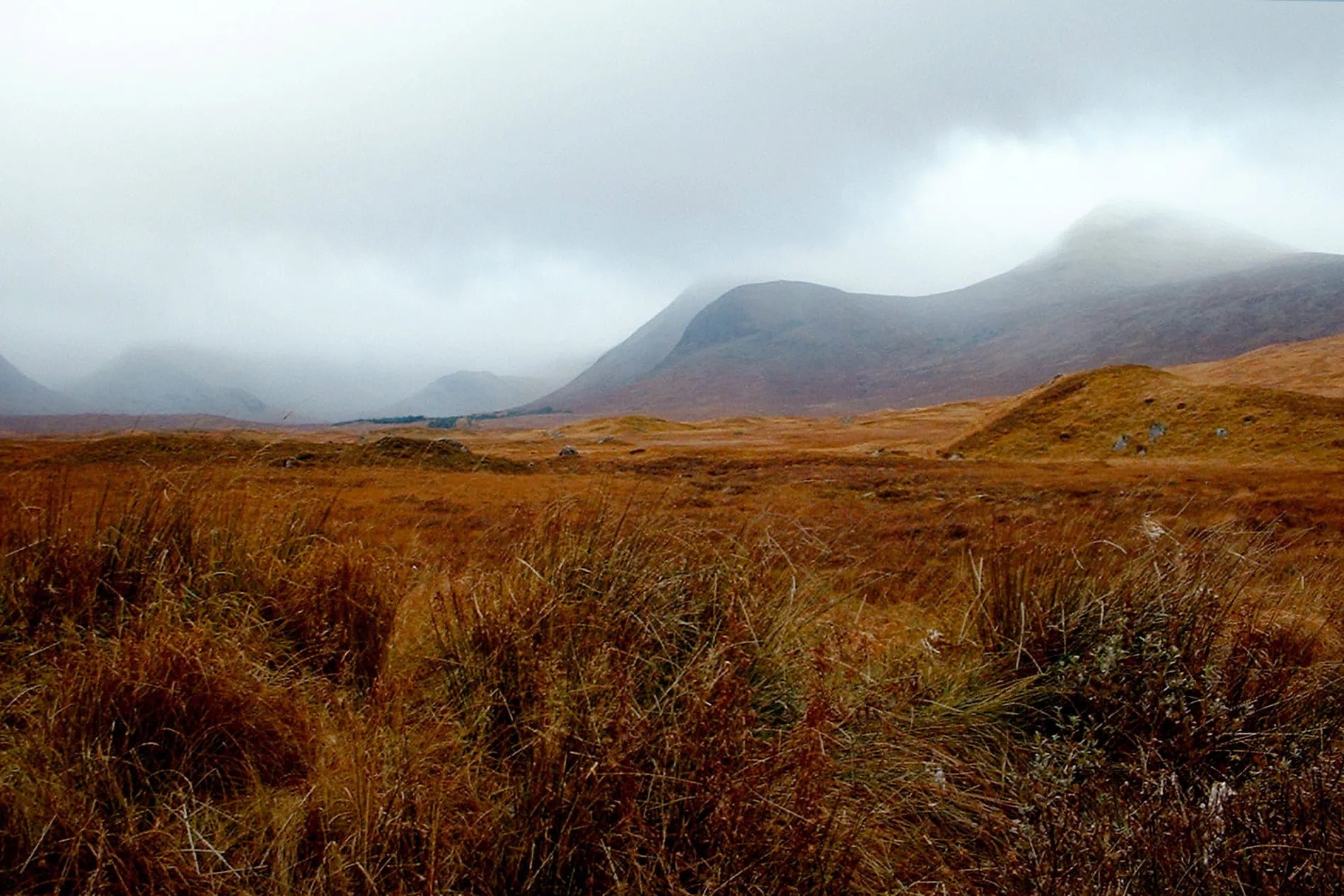
In November, when most of the travelers had left the Highlands, I set off to photograph them. Ten days, from Edinburgh to the Isle of Skye, then Glenfinnan, Fort William and Glencoe, at a time when the tourist season is fading away and when light becomes the most interesting part of the year.
It is not a coincidence of the calendar. It’s a photographer’s choice, With its promises and its constraints. In this article, I take you through the preparation for this trip: why November, how to cope with very short days, which itinerary I’ve created, and what I hope to bring back.
I won’t show you any photos from this trip yet. They will come back when I get back. Here, we are talking about what happens before the triggering event: the intention, the observation, the way in which we prepare ourselves to see.
Scottish summer has its advantages, but it also has its crowds, its fully booked car parks and viewpoints where you queue to get the same picture. In November, these places become what they were again: landscapes, before they become spots.
What first attracts me, It’s the silence. The ability to stand in front of a lake without anyone around, to listen to the wind, the water, the birds, and let the landscape come to me rather than chasing it. For me, photography begins there: making space, opening the senses, feeling before framing.
November is also a season of materials, and especially of palettes. I discovered Scotland more than twenty years ago, as a simple tourist, and its autumn colors have never left me: a patchwork of red, dark green and rather cool blue-green hues. The rusty ferns of Glencoe, the dark rocks of Skye washed by the rain, the skies that change every ten minutes. A raw, mineral palette that corresponds exactly to the atmosphere I seek in my images.
And finally.., Leaving during the off-season is a way of responding to my leitmotiv: explore, see things in a different way. Photographing a famous place at a time when no one is looking at it is already giving yourself a chance to show it in a different way.
In mid-November, on the Isle of Skye, the sun rises at around 8 a.m. and sets at around 4 p.m., local time (an hour less than in France). There are about eight hours of daylight, sometimes less under a low sky. This is the data that structures the entire journey.
The good news is that the sun remains low throughout the day. The scorching light, the one we wait for for a few minutes in summer, lasts here for hours. The reliefs are shaped, the textures of the rock stand out, the shadows stretch even at noon. And it is not necessary to get up at 4 a.m. to be in place at sunrise.
The downside is that we are not allowed to make mistakes. An hour lost on the road is one eighth of the day that is lost. Therefore, I prepare each day with a main location for sunrise, a location for sunset, and nearby alternatives in case of unfavorable weather.
Long nights also open up another door: astrophotography. The new moon falls just before our arrival, which leaves a dark start to the first few days. And on Skye, a polar aurora is never impossible in November. JDon’t make it a goal, but the tripod and the front panel will always be ready.
Eight full days on the ground, plus two days of travel, for a loop starting and ending in Edinburgh:
Why four days on Skye? Because in November, the weather decides. In a single day, you can lose everything in the fog. In four days, we give ourselves time to wait for the right light, to return to a place, to let a scene mature. It’s the same principle I always defend: it’s better to have fewer places, but more time for everyone.
The order of the loop also matters. Starting with the city allows you to set the sights and gear before the big open spaces. Ending with Glencoe is to finish on one of Scotland’s most powerful landscapes, with a view already sharpened by a week of fieldwork.
The Glenfinnan viaduct It is one of the most photographed images of Scotland, almost always featuring the Jacobite, the steam train made famous by the Harry Potter films, which passes it through in a cloud of smoke. In November, that image no longer exists: the 2026 season of the train ended on October 23rd, and it does not run in winter (source).
I could have regretted it. I see it more as a chance. Without the train and the crowd waiting for it, the work itself remains. Its twenty-one concrete arches, its perfect curve set in the valley, the Loch Shiel at its foot and the surrounding mountains. Architecture in a landscape, which can finally be seen for what it is.
This is exactly the kind of situation I like: a place that everyone thinks they know, and that we have to learn to see again. I will seek out less frequented viewpoints, sharp lights on the arches, perhaps a more graphic approach, playing with the geometry of the curve.
If your project is to photographing the train itself, Keep this in mind: it only operates seasonally, usually from late spring to October, and the dates change from year to year. Always check the schedule of the operator, West Coast Railways, before building your itinerary around it.
In Scotland in November, You shouldn't expect good weather : you have to prepare for the change. Fine rain, showers, strong wind, sudden lightings, sometimes snow on the tops. Often all this in the same hour. That is precisely what makes the skies dramatic, provided you are equipped to stay outside.
As for clothing, I’m relying on the three-layer system: a breathable layer against the skin, a warm layer, and a jacket and trousers that are truly waterproof. Add good waterproof hiking shoes, fine gloves that allow you to adjust the settings, and a hat. Staying immobile for an hour while waiting for the light to cool down quickly.
In terms of equipment, my Canon R6 Mark II is tropicalized, but I don’t rely on it alone. I plan to:
One final piece of advice: let the camera acclimatize in its bag when you return to a warm place. Switching directly from the humid cold to a heated room is guaranteed condensation inside the lens.
I’m leaving without a list of images to check off. I know the postcards of Skye and Glencoe, as you probably do. I’m not interested in reproducing them. What I’m looking for is my own interpretation of these places.
I hope for wet, textured rocks, mineral blues at dusk, lights that pierce through a heavy sky for a few seconds. I also hope for moments when I don’t photograph anything, just sitting facing the landscape, listening. It’s often those moments that make the following images come true.
I also bring some equipment to film with. Part of this journey will inform my narrative films about the field, which tell the story of what happens around the image: the waiting, the doubt, the changing weather, the joy when the light finally arrives.
And if Scotland doesn’t give me what I imagine? Then it will give me something else. That’s the whole beauty of the terrain: We leave with an intention, We return with what the place has kindly offered.
This article is the first in a series. On my return, I will tell you about the places, with the images, the mistakes and the surprises. A video will complete the story. my YouTube channel, and the most accomplished photographs will join them my Fine Art galleries.
If you want to follow this journey and receive the account as soon as it is published, subscribe to the newsletter. And if you are planning a photo trip to Scotland yourself, whether during the off-season or not, please let me know in the comments which places you are interested in: I would be happy to exchange ideas with you.
Thank you for reading and visiting Dragonstreet Photography, and we’ll see you soon!
Photographically yours,
David