Nature & Travel
Continue the journey
Do you like my articles and my field films? Leave me your email: I’ll notify you of each new article and each new film on YouTube, with a bonus quote.
Not 40 emails a week: I have paths to explore too!

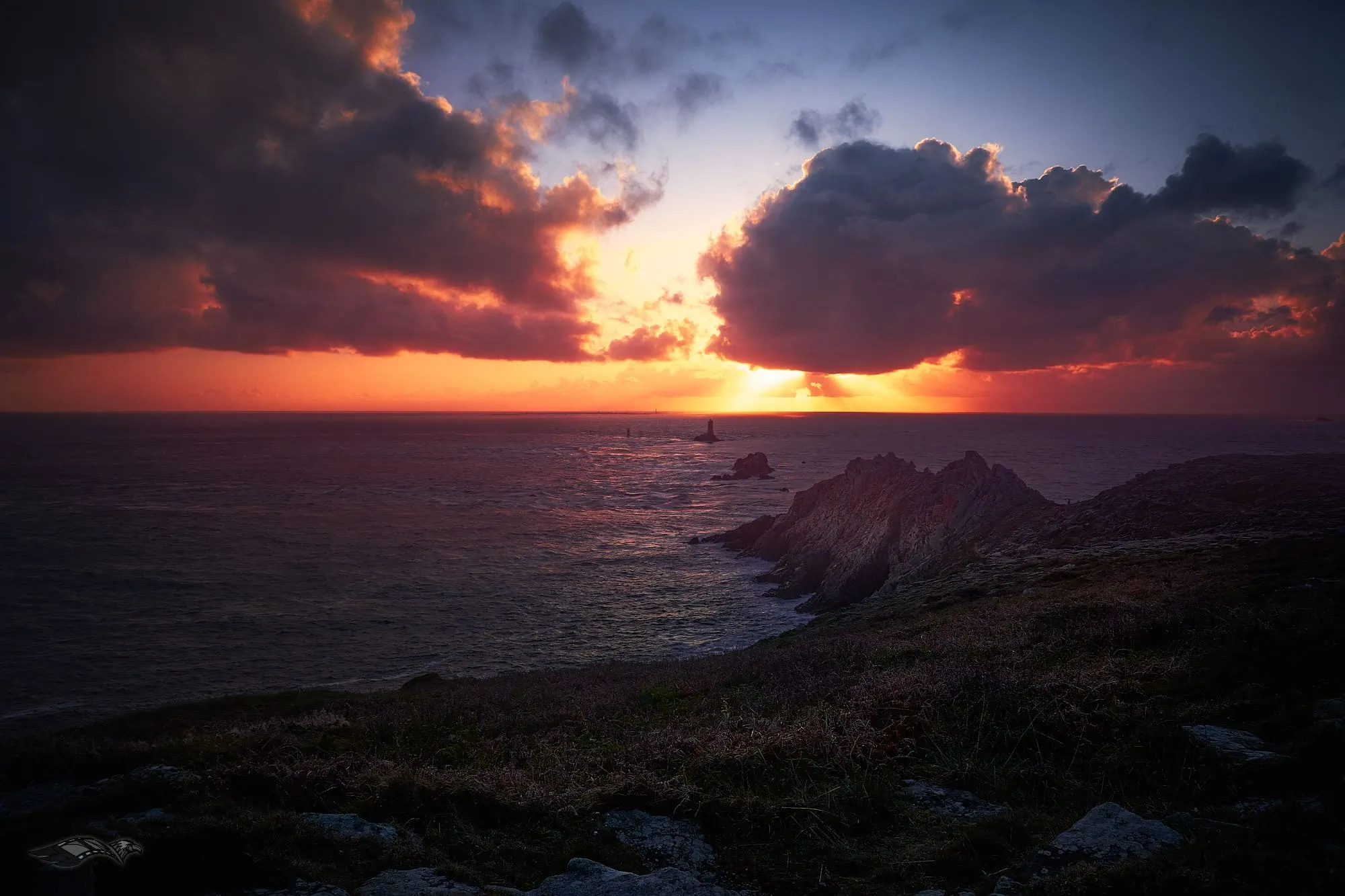
There are landscapes in front of which one stops. One looks at them for a long time, photographing their lines, the light, the colours. Then we head off again with a perfectly sharp picture… and almost no memory.
Conversely, it sometimes happens that a detail caught for a second — a hand resting on a table, a silhouette in the mist, a reflection on a pane of glass — stays with us for years.
Why do certain scenes escape us even though we watched them? And why do others seem enter us before we even had time to observe them?
The difference between seeing and looking might seem simple. It is much less so as soon as you hold a camera.
In common usage, seeing is almost involuntary. An image reaches us, we see a car drive past, a light turn on, someone enter a room. We hadn't asked for anything: our eyes were open, the world presented itself. (We are drawn to movement, light, etc.)
Watching, on the contrary, presupposes a decision. The gaze wanders, lingers, searches. We look at a face to read an emotion there. We look at the sky because the storm is approaching. We look at a photograph because it holds onto something of us. 🤔
The formula would therefore seem obvious: seeing is passive, looking is active. Yet, photographers rarely talk about ’learning to look«. They talk about learning to see. It is not a vocabulary mistake. Perhaps that is where it all begins. 😬
We look constantly. At screens, faces, streets, landscapes, hundreds of images every day. But our attention cannot retain everything. She sorts, simplifies and eliminates. It often replaces what is actually in front of us with what it already thinks it knows.
A beach becomes «a beach». A mountain becomes «a mountain». A loved one becomes that so familiar face that we stop noticing the changes. We recognise before we observe.
This is also what happens when we arrive in front of a spectacular location with a photograph already in mind. We look for the expected viewpoint, the familiar composition, the image that will prove we were there. We look closely, sometimes for a long time, but we no longer truly see the place. We check that it resembles its representation.
The gaze is directed. Vision, on the other hand, has closed in. 😱
Learning to see is not about increasing the power of your eyes. It is more a matter of suspending, for a few moments, what one already knows.
Seeing often begins when a detail resists the label we had placed on the scene:
None of this is necessarily spectacular, but something suddenly becomes more precise. The world ceases to be a backdrop; it becomes a presence once again. To see, in the photographic sense, would therefore not be to receive an image, but to make oneself available to what was not foreseen. 😮💨
It is easy to believe that the camera serves to preserve what the eye has seen. In reality, it teaches us above all everything we had not seen. 😱
In the viewfinder, the world becomes a frame. You have to choose what goes into it, and accept what stays outside. A slight variation in height transforms the relationships between the shapes. A step to the side makes a line appear, a post disappear or brings two silhouettes closer together. Light no longer merely illuminates: it separates, conceals, reveals.
As long as the answer remains just a name — mountain, portrait, street — itphotography risks describing. When it becomes a relationship, a tension or a sensation, the image begins to say something other than «it was there». 🤓
Two people placed in the same place, at the same time, with the same camera will not take the same photograph. Not because one necessarily has a better grasp of the technique, but because they will not notice the same things.
One will be drawn to the scale of the landscape; the other to a house almost invisible at its foot. One will wait for the sky to open; the other will photograph the encroaching shadow. Each will carve out from reality what echoes her history, her mood, her fears or her desires.
A photograph therefore never simply says: «this is what was in front of me». It also says: «this is what I was able to see at that moment».
That is what makes the images personal, without them needing to be extraordinary. The subject may have been photographed a thousand times. That particular sense of attention, however, belongs solely to the person who was there.
Technique is invaluable. It makes it possible to choose a depth of field, capture motion, and work with difficult lighting. But it cannot decide what deserves our attention.
An image can be sharp, balanced, well exposed and yet remain silent. Everything is in its place, except perhaps the necessity to press the shutter.
On the contrary, an imperfect photograph can hold us back because it contains a hesitation, a proximity, a fragile truth. Her flaws do not automatically make her a good picture. They simply serve as a reminder that Fairness is not measured solely by precision.
The point, therefore, is not to pit the human perspective against technology. The technique should become familiar enough not to interrupt the gaze. She is a grammar: essential for formulating, insufficient for having something to say.
There is no setting for that 😅, but a few habits can help make your attention more available.
The first picture is often the one we had planned. Once it is taken, the place sometimes starts to reveal itself. To stay a few minutes, changing the distance and looking at what happens at the edges of the stage makes it possible to go beyond the obvious.
Without immediately taking out the camera, try to name what is drawing you in: a colour, a proportion of sizes, a discomfort, a movement, a light. Putting words to a sensation helps to distinguish the apparent subject from the true subject.
Familiar places are difficult because we already believe we know them. They are also the best training grounds. Returning to the same route, the same room, or the same face forces us to look for what has changed.
Not just his. A photograph sometimes deserves more than the few seconds we grant it. Where does the eye land first? What remains out of frame? What relationship unites the elements? What do we feel before understanding why?
Set oneself a limit — a photograph, or a few shutter releases — guarantees nothing. But this constraint puts time back between intuition and the act. It forces one to choose rather than accumulate.
We live surrounded by images and we pass through them very quickly. Photography can contribute to this acceleration: take, check, publish, move on to the next one. But it can also produce the opposite movement.
It can make us slow down for a light that won't last. To make us aware of a face that habit had rendered transparent. To give importance to that which had none a few seconds earlier. So, what is the difference between looking and seeing?
Looking is directing one's eyes towards something. Seeing, in the deepest sense, is allowing that thing to alter our attention.
We look at what we already know. We see what we hadn't noticed yet.
And perhaps a photograph begins right there: not when one brings the camera to one's eye, but when the world, suddenly, ceases to seem self-evident. What are your thoughts? Leave your opinion and experience in the comments,
Thank you for visiting Dragonstreet Photography, see you very soon,
David
In everyday language, seeing generally refers to involuntary perception, whereas looking implies directed attention. In a photographic approach, however, «seeing» takes on a deeper meaning: truly noticing a light, a relationship or a detail that habit had rendered invisible.
Because the device does not choose what deserves attention. Learning how to see involves going beyond the mere recognition of subjects to perceive the forms, light, gestures, tensions and emotions that can build a personal photograph.
You can develop your eye by slowing down, observing before releasing the shutter, returning often to familiar places, voluntarily limiting the number of photos you take, and carefully studying the images of other photographers.
Technique helps to translate an intention, but it does not create that intention. A photographer can have complete mastery of their camera without producing a striking image. The ideal is to know the technique well enough so that it supports attention instead of interrupting it.
Yes. The photographic eye is not solely an innate talent. It is formed over time, through practice, curiosity, image analysis and attention paid to everyday life. Having an eye is above all learning to recognise what touches us and giving it a visual form.