You hear it everywhere: in training, as a portfolio critic, under the photos that go viral on social media. «A good photo tells a story.» The formula sounds right; it reassures, it provides a simple criterion for judging an image.
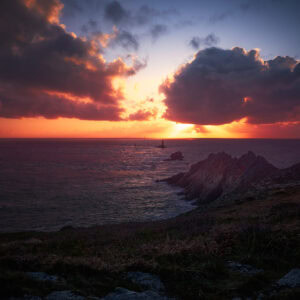
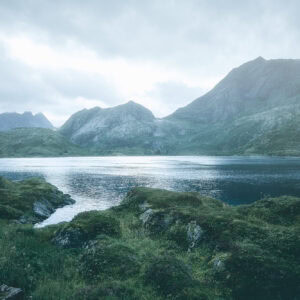
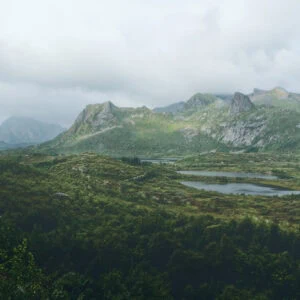
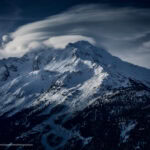
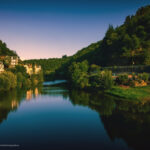
And yet... There are photographs that tell nothing — no character, no tension, no before or after — and which nevertheless stops us dead in our tracks. A granite wall at Saint-Guénolé battered by the waves. A layer of mist on the heights of the Stangala. Nothing happens there. Nothing is resolved. And yet, we remain.
So, should a photo really tell a story? Or is it a requirement that is imposed on it without asking whether it suits it? 🧐
1. Where does the requirement to «tell a story» come from?»
This reflex does not come from nowhere. It comes first from two very distinct worlds: photojournalism, where the image must carry the narrative of an event alone, establishing a context readable in a fraction of a second; and, more recently, the storytelling culture that has invaded photography education and social media, where simple criteria are sought to judge an image.
A photo that «tells something» seems easier to evaluate than a photo that merely exists. 🤔
The problem is that this requirement has spread to all forms of photography. It is now applied to landscape, abstract art, minimalism… genres that often have nothing to say, and that didn’t ask anyone to do so.
2. What «telling» really means in photography
Telling a story requires a structure: a beginning, a tension, sometimes a resolution. A narrative, in the literary sense of the term — something that takes place over time, even if that time is suggested in a single image (an exchanged glance, an interrupted gesture, a situation that one guesses).
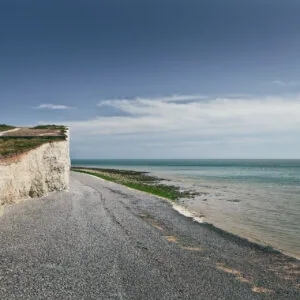
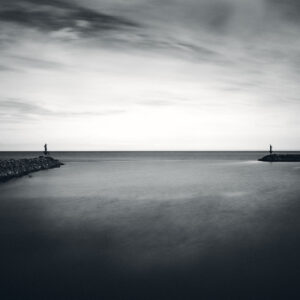
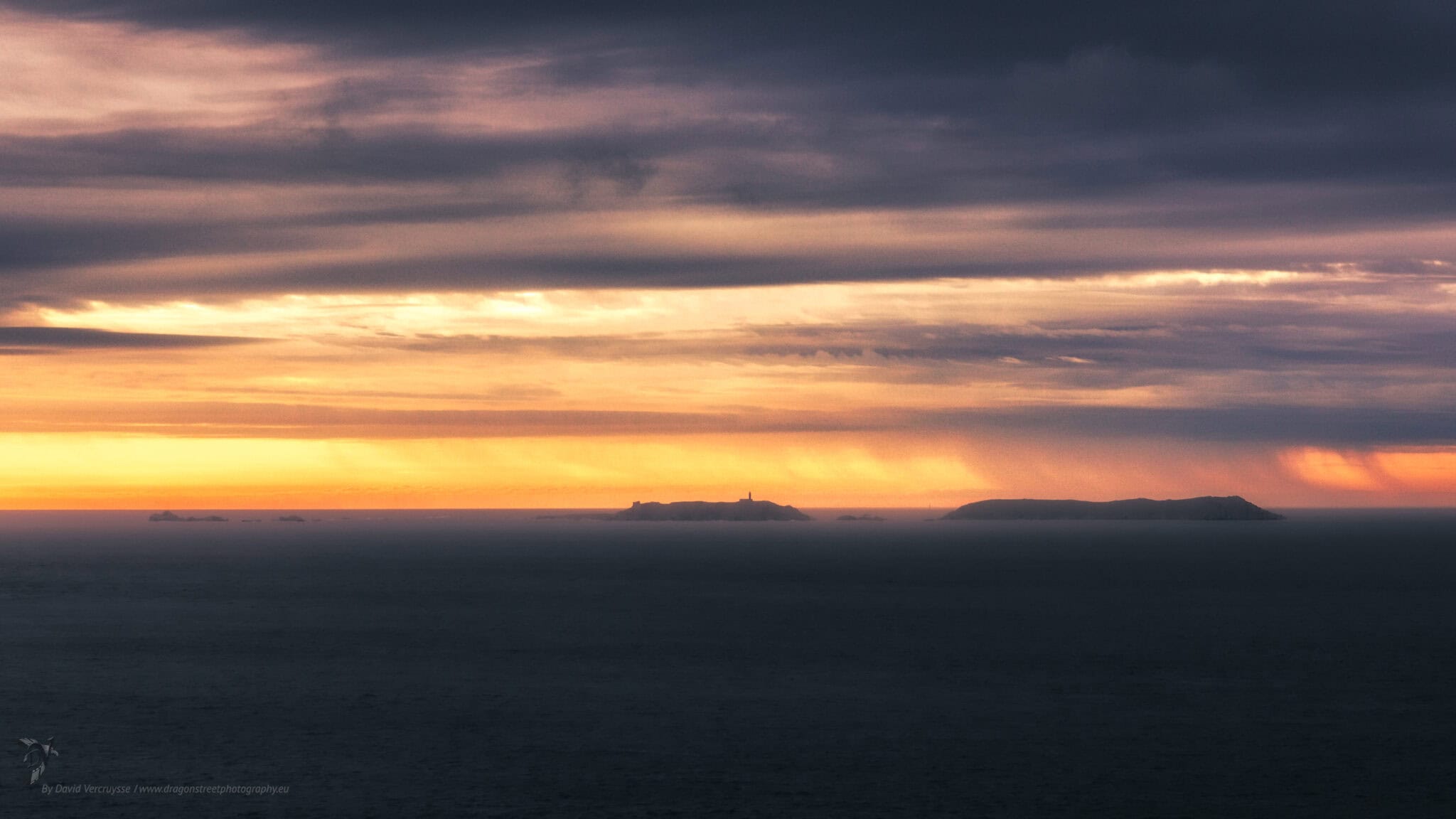
Many of my own subjects are not of that order. The silence of a landscape, the soothing effect of a late-day light, the tranquility of a coast battered by the wind; these are states, not stories. Nothing starts there, nothing ends there. You can’t make a sentence out of it like «there was a time». And that’s exactly why they work.
3. Every image involves a story, even if it doesn't necessarily tell it.
This is the nuance that deserves to be explored, because it completely changes the starting point.
A photograph that tells nothing is not, however, a photograph devoid of history. There is always a story behind it; the story of the gaze that chose it, the precise moment the gesture was triggered, the journey it took to get there. That look belongs only to the person who was there, even if the subject has been photographed a thousand times before.
Therefore, it is necessary to distinguish two things that are too often confused:
The first is a prerequisite for any photograph; the second is an option among others. The fundamental question may therefore not be «should a photograph tell a story?» but «what is lost by wanting it to tell one, and what is gained by simply letting it be?» 😮💨
4. What we lose by wanting a photo to tell a story
The absolute desire to have an image tell something, when it is not its nature, has a cost.
The first risk is the artificiality. You force a staging; you add a symbolic element that’s a bit overdone — a lonely silhouette in the right place, an object loaded with meaning — so that the image «says» something readable. The story then becomes a veneer slapped on the photo rather than a necessity that came from it.
The second risk is to turn the image into an illustration. It ceases to be a visual experience and becomes the translation of an idea already formed before the shot is taken. However, a photograph that merely describes a name — mountain, portrait, street — often remains silent, even when perfectly clear and well-exposed.
Let’s take a concrete example. Facing a rocky wall battered by the sea, one might be tempted to slip a tiny figure into it to «tell» the smallness of man in the face of the elements — an effective method, but one that belongs to a completely different photographic project. Without it, the photo no longer tells anything of that kind. It nevertheless does not lose anything: it simply changes registers.
5. What we gain by simply letting it be
Conversely, a photograph that refuses to tell a story gains something specific: it becomes a state rather than a narrative.
It does not impose a closed meaning. It leaves the observer the space to complete it, to project their own memory, their own fatigue, or their own moment of calm. That is exactly what happens in the silence and emptiness of an image: nothing is told, and yet something is transmitted there—a sensation, a presence, a breath.
Let’s take the example of the rocky wall, this time without a character or any additional narrative elements. The photo no longer says «here’s a story». It says rather: «stay here for a moment, with me». This is not a lack. It’s another way of working.
6. The true criterion is not moral; it is functional
Therefore, it is not a matter of decreeing that narrative photography is inferior, or that only contemplative photography has value. A reportage, an engaged portrait, a documentary series need to tell a story — that is their function, their contract with the reader/observer.
The real criterion is therefore not «should she tell the story?» but « What exactly is this image trying to convey?" Some images need a narrative to fully exist. Others lose their authenticity as soon as we try to impose one on them. This is not a hierarchy. It’s a question of adequacy between intention and form. 🤓
7. How to know if a photo needs to tell a story
Some guidelines, without a complete recipe:
8. A question that remains open
So I don’t think that’A photo must tell a story. I believe she can choose to do it, or choose not to do it — and that the second option is neither a renunciation nor a concession. It is another, equally demanding, way of showing off.
So the next time a photo stops you, ask yourself the question differently: are you looking for really a story — or something else? What do you think about that? Leave your opinion and experience in the comments.
Thank you for visiting Dragonstreet Photography, see you very soon,
David
FAQ: Photography and storytelling
Should a photo tell a story?
No, not necessarily. Some images work through narration, others through evoking a state — silence, tranquility, presence. The essential thing is that the form corresponds to what the image is really trying to convey.
What is a narrative photo?
It is an image constructed around a tension, an “before” and an “after” suggested, often conveyed by a subject, a gesture, or a situation that leaves one guessing about a progression in time.
How to give meaning to a photo without putting it on display?
By working with light, space, emptiness, and composition rather than anecdote, a well-established state — silence, tension, calm — can convey meaning without going through an explicit narrative.
Why do certain photos without any story mean so much to us?
Because they leave an open space for the observer, instead of imposing a closed meaning on them. This openness allows everyone to project their own memory or their own current sensation onto it.