Vous aimez mes articles et mes films de terrain ? Laissez-moi votre email : je vous préviens à chaque nouvel article et à chaque nouveau film sur YouTube, avec une citation en prime.
Pas 40 mails par semaine : j'ai aussi des chemins à explorer !
Sometimes all it takes is a photograph: An old boat tied to a pontoon, a path disappearing among the ferns, a tiny figure facing the ocean. The orange light of a summer evening on the wall of a house.
We look at the picture and, suddenly, it all comes back; the wind, the smell of damp earth, the sound of the waves, the tiredness in our legs. A voice we hadn't heard for a long time etc ...
Why do certain photos stay etched in our memory while others disappear into the crowd? The answer is not just to be found in the beauty of the image. It hides in our brain, our emotions and the stories we attach to places.
1. A photograph is only an image
We like to say that a photograph «captures a moment». In reality, it captures very little of it.
It contains neither the morning chill, nor the scent of pine trees, nor the birdsong. It does not recount the conversation that preceded the incident, nor what happened a few seconds later. Yet, our memory can reconstruct all of that from a single visual detail.
A photograph then acts as a key. The image we see opens the door to a much broader memory, made up of sensations, emotions, thoughts and fragments of personal history.
That is why two people never see the exact same photo. One looks at a mountain landscape. The other remembers the day she finally dared to travel alone.
The joy of an arrival, the fear felt at the edge of a cliff, the wonder in front of a wild animal, the melancholy of a final evening, or even the relief after a long hike. 🤓
Emotionally charged experiences are more likely to leave a lasting impression. The amygdala, a region of the brain involved in processing emotions, which plays a part in the consolidation of certain long-term memories. Emotional intensity acts in a way like a signal: this moment matters, keep it.
This does not solely concern happy emotions. A photograph can strike us because it evokes an absence, a difficult journey or a place we will probably never see again. The unforgettable photograph is therefore not necessarily the one that makes us happy. It is the one that makes us feel something.
The work of neuroscientist James McGaugh shows, in particular, that emotional arousal can influence the consolidation of long-term memories. Consult the scientific publication.
3. Our memory loves distinctive images
The images generally have an advantage with words when it comes to recognition and memorisation. Researchers sometimes talk about a «picture superiority effect.
A photograph immediately provides a large amount of information: shapes, colours, faces, light, depth, an organisation of space. When it possesses an unusual detail, it stands out even more from the thousands of other images encountered every day.
Consider the difference between these two memories:
a pleasant beach under a blue sky ;
a black sand beach crossed by a white horse in driving rain.
The second scene has a much stronger visual signature. It resists confusion better.
Perfection is therefore not always an ally of memory. By constantly seeking out the same colours, the same framing and the same sunsets, our photographs can end up all looking the same.
What remains is often the anomaly: an unexpected gaze, a ray of light, a sudden mist, a red garment in the middle of a green forest. Recent research suggests precisely that the distinctiveness of an image plays an important role in its memory advantage.See the study on image memorisation.
4. A photograph becomes unforgettable when it tells our story
An unknown photograph can be magnificent. A personal photograph can be moving. Why? Because it doesn’t just represent what was in front of the lens. It connects us to our own lives.
The cabin photographed by the edge of a lake may not be spectacular, but it is there that you waited out a storm with a loved one. That little cafe will never win a photography competition, yet you made a decision there that changed the rest of your journey.
The power of an image therefore also depends on its autobiographical relevance.
Photographs can serve as clues to find memories located in a precise time and place. They help us to reconstruct a scene, but also to find the version of ourselves that lived it. Research on autobiographical memory confirms that visual cues can facilitate access to detailed personal memories. Discover the study.
Certain photos remain in our memories like this because they silently answer several fundamental questions 🤔 : Where was I? With whom? What was I feeling? Who was I becoming?
5. Photography brings back sensory memories
An image is visual, but the memory it triggers is not necessarily so. Looking at a photograph of a market in Morocco, we can almost smell the spices. An Icelandic waterfall awakens the memory of a continuous roar and fine droplets on the face. A mountain refuge reminds us of the taste of piping hot soup after hours of walking.
Our autobiographical memory links information from several senses. A photograph can therefore become the starting point for a much richer reconstruction. The more attentively an experience has been lived, the more pathways the image will have to take us back to it.
It is also for this reason that travel memories sometimes seem more intense. When we leave our usual routines, we become attentive once again, we observe the light, the sounds, the smells, the gestures and the details that our brain would have ignored in a familiar environment.
Travel awakens the senses — and the senses nourish memory. 😎
6. Novelty makes travel memories stand out more
In daily life, many days are alike. We take the same streets, look at the same buildings and repeat the same actions. The brain does not need to record every journey with precision; it is in automatic mode and frees up resources for other things.
When travelling, your reference points change. Language, relief, vegetation, weather, faces and habits become new. Our focus is strengthening because we need to understand our environment.
A photograph taken during these moments can be anchored more easily within a precise sequence: the first morning, the ascent, the meeting, the storm, the departure.
Nature often intensifies this feeling. Standing before an old-growth forest, a star-filled sky or the vastness of a desert, we sometimes experience a kind of vertigo. We are becoming aware of our small place in something that is greater than us.
Photography then becomes the trace of a moment when our perception of the world momentarily expanded.
7. Imperfections can sometimes make a photo more human
The most important photos of our lives are not always the sharpest. 🤪
A face might be slightly blurred, the horizon could be crooked, the light might be too bright, a hand or a backpack might awkwardly enter the frame, yet this image will endure.
In travel memories, small human details matter enormously: mud-covered shoes, a post-meal table, laundry drying in front of a window, a wind-battered tent or the tired smile of a walking companion.
They are the ones who transform a beautiful landscape into a lived experience. 🙂
8. We enhance the photos we look at and tell
A photograph also becomes memorable because we return to it. We show it to someone close, we recount what happened, we print it, place it in a notebook or choose it as a screen saver.
Every return reinforces certain pathways to memory. But it can also transform it. Human memory is not a perfectly frozen archive: it reconstructs the past every time we recall it.
By dint of telling the story of a photograph, the image and the narrative sometimes end up merging. We remember the moment, but also everything we have thought and said about it since. Photography therefore does not just preserve a memory. It takes part in its evolution.
9. The paradox: taking too many photos can mean we look less closely
We photograph so as not to forget. Yet, photograph mechanically can sometimes produce the opposite effect.
When we completely outsource memory to the device, we risk paying less attention to what is unfolding before us. A study conducted during a museum visit showed that participants remembered certain objects less well when they photographed them without paying special attention. In contrast, carefully framing a detail could alter this effect. Consult the study.
So the problem is not photography itself. It is the lack of attention. Taking twenty identical images without looking up sometimes distances us from the moment. Consciously choosing what we want to keep forces us, on the contrary, to truly look.
10. How can you take travel photos that will stay with you forever?
There is no recipe capable of manufacturing an emotion. Nevertheless, a few habits can give more depth to our images.
A landscape shows where you were. A detail can tell how you experienced it. Photograph footprints, hands, condensation on a window, camp gear, signs, wet clothing or the remains of a meal.
Include a human presence
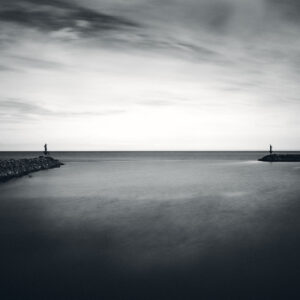
A silhouette gives a scale to the landscape and makes it easier to imagine oneself within it. It also serves as a reminder that a place is not merely a backdrop: it is traversed, inhabited and felt.
Photographing the in-between moments
Major milestones are not the only things that deserve a picture. Waiting for a train, packing your bag, a break by the side of the path or the walk back in the rain often hold more of a story than posing in front of a monument.
Match a few words to the important images
Note down a scent, a phrase heard, a feeling or the name of someone you met. A few words later on will be enough to make the memory much more precise.
Take fewer photos, but choose them more carefully
Organising your photos is all part of the journey. Selecting a few of them makes it possible to distinguish the true emotional benchmarks of mere accumulation. A series of ten candid photographs will often tell more than an eight-hundred-file dossier that is never looked at.
Print the pictures that matter
A printed photograph has a different presence. We cross paths with it without looking for it, we touch it and we pass it on. It escapes the continuous stream of screens and finds its place back in our daily lives.
11. The true value of a photograph
A photograph stays in our memory when it goes beyond what it shows. She becomes the shortcut to an emotion, the threshold of a interior landscape, the fragile proof that we were there. It preserves less the exact shape of the world than the way we felt it.
That is why an image that seems ordinary to others can be immense for us. The photographs we never forget are not always the ones where everything is perfectly framed. They are the ones that continue to whisper something long after the journey. They do not just say: look at this place.
They say: remember the person you were when you looked at him. 😅 There you go for the little dose of philography (philosophy and photography) 😁, and human physiology.
Thank you for visiting Dragonstreet Photography, see you very soon,
David
12. FAQ: Photos and storage
Why do some photographs instantly evoke an emotion?
Because they are associated with an emotionally charged personal experience. The image acts as a cue allowing the brain to retrieve sensations, people and events linked to that moment.
Why do holiday photos seem more memorable?
Travel multiplies novelty and demands more of our attention. Unfamiliar landscapes, sounds and customs create more distinctive experiences than the repetitive scenes of everyday life.
Can a blurred photo be more striking than a beautiful one?
Yes. The memorial value of a photograph depends less on its technical perfection than on the story and emotion associated with it.
Does taking photos always help you to remember?
Not necessarily. Taking photos mechanically can reduce the attention paid to the scene. Mindful photography, focused on a detail or an intention, encourages observation more.
Why do we like looking at old photos?
Old photographs reconnect us with our personal history. They can revive autobiographical memories, but also allow us to measure the time that has passed and the changes that have taken place in our lives.